

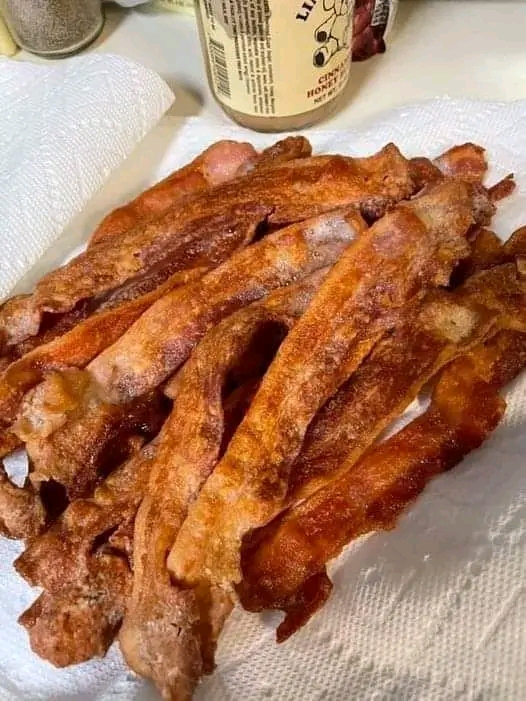
In this article I will take you on a sizzling journey that showcases crispy strips of bacon in mouthwatering detail. You will learn not only how to cook the crispiest bacon, but also the history, science, variations, health considerations, creative recipes, and even how bacon content can be monetized in blogs or food media.
Introduction
Few foods combine universal appeal, savory aroma, and visual allure like crispy bacon. The image of crisped golden-brown bacon, its edges curling and glistening with rendered fat, delights breakfast lovers, sandwich aficionados, and gourmet chefs alike. In every culture that embraces pork, bacon plays a starring role—on burgers, in salads, layered over vegetables, and as a breakfast staple. In this article, you will be immersed in the world of bacon: from its origins and science to perfect techniques, variations, creative applications, and strategies to turn bacon content into revenue.
History and Cultural Significance of Bacon
Bacon has ancient roots: curing pork was an early method of preservation in many societies. Over centuries, smokehouses perfected bacon curing and smoking, making bacon both functional and flavorful.
In the U.S., bacon became a breakfast icon in the early 20th century; public relations campaigns promoted bacon and eggs as the ideal morning meal. Advertising and nutritional guidelines aligned to cement bacon’s daily breakfast role.
In recent decades, bacon mania evolved into a subculture. Bacon appears in everything: ice cream, candy, cocktails, bacon salt, bacon chocolate, baconnaise. Restaurants highlight bacon as a “luxury” upgrade, menus tout bacon as a flavor enhancer. The 2024 Bacon Report finds that 69% of menus now offer bacon in some form.
From food marketing stunts (like websites built from bacon strips) to viral campaigns, bacon has become a marketing symbol itself.
Thus, showcasing crispy strips of bacon is tapping into deep culinary nostalgia, visual appeal, and market demand.
The Science of Crispiness
What makes bacon crispy? It’s all about rendering fat, browning (Maillard reaction), moisture evaporation, and structural integrity.
Rendering Fat
Bacon is made from pork belly or side muscle, full of alternating layers of fat and meat. As bacon heats, the fat melts and renders (turns liquid). This fat must escape or drain away so that the remaining structure can crisp without being saturated in grease.
Moisture Evaporation
Raw bacon contains moisture. To crisp, that water must evaporate. As water turns to steam, it leaves behind drier structure, enabling crunch. If bacon is cooked too fast, the interior moisture may not fully evaporate before browning, leading to chewy or soggy spots.
Maillard Browning & Caramelization
As sugars and amino acids react under heat, they form browning compounds and flavor molecules. The crisp edges are where this reaction is strongest, giving deep color and savory flavor.
Structural Integrity
The arrangement of fat and connective tissue influences how bacon curls, how it holds crispness, and how it breaks. Thinner slices crisp faster; thicker slices need more heat and time and may retain chew.
Temperature & Heat Transfer
Low and slow is often better: moderate heat gives fat time to render before the meat burns. High heat can brown too fast on the surface while the center remains undercooked. Uniform heat (like from an oven) helps even crisping.
Techniques to Achieve Crispy Bacon
Here are proven methods, advantages, challenges, and tips for cooking bacon to ultimate crisp.
1. Oven Baking Method
Process: Preheat oven (typically 375°F to 425°F), line a baking sheet (often with foil), optionally place a rack, lay bacon strips without overlap, and bake until crisp.
Advantages:
Even heat distribution
Minimal splatter
Ability to cook large batches
Easier cleanup
Tips:
Use a wire rack so fat drips away and bacon air-cooks on all sides
Start with cold oven or preheated (both approaches exist)
Flip halfway through if needed
Monitor closely near end, as bacon can go from crisp to burned quickly
Time guide: Thin slices: 15–20 minutes. Thick cut: 20–25+ minutes, depending on oven and thickness.
2. Skillet / Frying Pan Method
Process: Use a cold or warm pan, lay bacon strips (don’t overcrowd), cook over medium heat, flip as needed, drain or blot fat, continue until crisp.
Advantages:
Direct control
Faster for few strips
Good for using rendered fat
Challenges:
Grease splatter
Uneven cooking if pan has hot spots
Requires close attention
Tips:
Use a heavy cast-iron or nonstick pan
Start cold and bring heat slowly
Use tongs to flip gently
Drain on paper towels
3. Microwave Method
Process: Lay bacon between paper towels on microwave-safe plate, microwave in intervals until crisp.
Advantages:
Fast and convenient
Minimal cleanup
Drawbacks:
Possible uneven crispness
Texture less satisfying
Tips:
Use quality bacon
Adjust time based on thickness
Let rest a moment to finish crisping
4. Air Fryer Method
Process: Arrange bacon in air fryer basket (not overlapping), set temperature (e.g., 350–400°F), cook 8–12 minutes depending on thickness.
Advantages:
Crisp without much grease
Fast
Contained splatter
Tips:
Don’t overcrowd
Shake basket or flip halfway
Watch timing, as air fryers vary
5. Grilling / Broiling
Process: Use grill or broiler, place bacon on grates or elevated pan, cook with indirect or direct heat, watch carefully.
Advantages:
Smoky char flavor
High heat crisping
Drawbacks:
Risk of flareups
Less control
Tips:
Use foil or drip tray
Keep distance from flame
Monitor constantly
Step-by-Step: Perfect Crispy Bacon Guide
- Choose quality bacon — look for streaky pork belly slices with good fat/meat ratio, minimal preservatives, consistent thickness.
- Pre-prepare sheet or pan — line with foil or parchment (for easy cleanup), place a wire rack if possible.
- Space the strips — no overlapping, allow space for heat and fat flow.
- Begin cooking temperature — mid-range heat (around 375–400°F) or medium stove heat.
- Cook gradually — allow fat to render, moisture to evaporate; avoid jumping to high heat too early.
- Flip / rotate — for skillet or baking, flipping ensures uniform crisp.
- Watch closely near end — as crisping happens quickly, remove just before burning.
- Drain and rest — transfer to paper towels or wire rack, let stand a minute so residual fat drips and crisp texture sets.
- Serve immediately or cool and store in airtight container with ventilation.
Variations & Creative Twists
Flavored Bacon
Maple bacon: Brush or glaze with maple syrup mid-cook
Peppered bacon: Coat edges with cracked black pepper or spices
Brown sugar bacon: Sprinkle brown sugar early so it caramelizes
Spicy bacon: Add chili flakes, cayenne, or pepper rub
Herb bacon: Use rosemary, thyme, or smoked paprika
Bacon Thickness
Standard / thin cut: Crisps faster, good for layering
Thick cut / artisan bacon: More chewy center, dramatic texture contrast
Alternative Meats
Turkey bacon: Lower fat, different texture
Beef bacon / biltong style: Similar methods but distinct flavor
Pork substitute (macon): Cured mutton bacon used in some regions
Bacon in Dishes
Bacon bits / crumbles: Chop cooked crispy bacon and sprinkle
Wrapped items: Bacon-wrapped scallops, shrimp, asparagus
Bacon lardons: Thick cubes used in salads or quiches
Bacon jam or spread: Simmer bacon with onions, sugar, vinegar
Bacon desserts: Bacon chocolate, candied bacon strips
Flavor Pairings & Serving Ideas
Eggs & breakfast: Classic pairing (scrambled, fried, omelets)
Sandwiches & burgers: BLT, club, gourmet burgers
Salads: Bacon crumbles in cobb salad, spinach salad with warm bacon vinaigrette
Soups / chowders: Bacon adds smoky depth
Vegetables: Wrap bacon around green beans, Brussels sprouts
Cheese & charcuterie: Bacon crisps on boards, bacon brittle
Sweets & contrast: Chocolate bacon, bacon in brownies
Health & Nutritional Considerations
Nutritional Profile
Bacon is high in fat (especially saturated), contains protein, sodium, and preservatives like nitrates/nitrites in some products.
Risks
Processed meat concerns: Processed meats are linked to cancer risk
Sodium load: High salt content can affect blood pressure
Fat & cholesterol: Moderation is key for cardiovascular health
Strategies for Healthier Bacon Use
Choose nitrate/nitrite-free or lower sodium options
Use thicker cuts to reduce